When Is Tree Felling the Most Appropriate Solution?
Healthy, well-positioned trees can be valuable features within a garden, providing character, shade and structure for many years. Wherever possible, appropriate tree surgery can often be used to manage growth, remove defective branches and maintain a tree’s condition. There are circumstances, however, when retaining a tree is no longer the most practical option. In these situations, professional tree felling may provide the safest and most effective long-term solution.
For property owners in Ravenshead, Nottinghamshire, the decision to remove a tree should be based on its condition, structure, location and future suitability. At Ravenshead Tree Surgeons, we carefully assess trees before recommending appropriate work, ensuring felling is considered when it genuinely represents the best approach.
What Is Tree Felling?
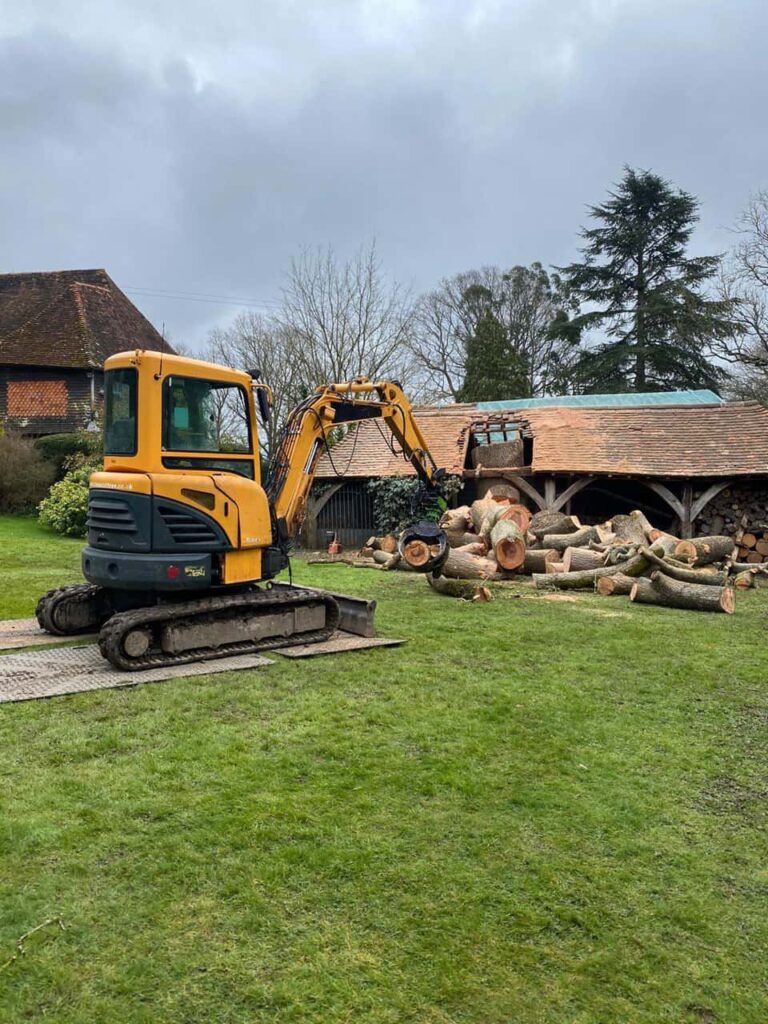
Tree felling is the controlled removal of an entire tree. Depending on the tree and its surroundings, this may involve bringing it down as a whole where sufficient space exists or dismantling it progressively in manageable sections.
The appropriate technique depends on factors such as:
- The height and spread of the tree
- Its structural condition
- Available working space
- Nearby buildings and garden features
- The position of surrounding vegetation
- Access to the site
Professional planning is particularly important where trees are large or positioned within established gardens.
When a Tree Has Become Structurally Unsafe
One of the clearest reasons to consider felling is significant structural deterioration.
Trees can develop defects within trunks, major branches or root systems that affect their stability. Warning signs may include substantial cavities, extensive decay, major cracks or significant movement.
Although pruning can manage certain structural problems, there comes a point where removing individual branches no longer adequately addresses the condition of the tree as a whole.
Professional assessment helps determine whether the tree can continue to be managed safely or whether removal is the more appropriate solution.
When a Tree Is in Serious Decline
Trees naturally experience occasional deadwood and minor defects, which can often be managed through routine tree surgery. Widespread decline is different.
A tree showing extensive dieback, significant deterioration or very limited healthy growth may have substantially reduced prospects for recovery.
Leaving a severely declining tree indefinitely can mean:
- Increasing amounts of deadwood
- Progressive structural weakening
- More frequent maintenance
- Greater difficulty managing the tree safely
Where meaningful recovery is unlikely, felling may provide a sensible long-term resolution.
When Storm Damage Is Extensive
Strong winds and severe weather can expose weaknesses within mature trees. While damaged branches can often be removed successfully, extensive structural damage may leave the remaining tree unstable or badly compromised.
Examples can include:
- Major limbs tearing away
- Significant trunk splitting
- Partial uprooting
- Severe canopy loss
- Previously hidden structural defects becoming exposed
A professional tree surgeon can assess whether corrective pruning is sufficient or whether the extent of the damage makes complete removal more appropriate.
When the Tree Has Outgrown Its Location
A tree may be perfectly healthy but no longer suitable for the space in which it is growing.
This can happen when a tree planted many years ago matures into a specimen considerably larger than originally anticipated. Its canopy may dominate a small garden, restrict access or repeatedly interfere with surrounding features.
Crown reduction and other pruning techniques can often manage excessive growth. However, repeated heavy management is not always suitable for every tree. Where the long-term relationship between the tree and its location is fundamentally unsuitable, removal may sometimes be the more practical approach.
When a Tree Is Affecting the Use of the Garden
Trees should generally complement the space around them rather than prevent homeowners from using substantial areas of their property.
An unsuitable tree can sometimes:
- Restrict access through the garden
- Dominate usable outdoor space
- Interfere with paths or seating areas
- Create excessive shading
- Limit future landscaping plans
This does not mean that every inconvenient tree should be felled. Professional tree surgery may provide an alternative. The important consideration is whether the tree can realistically be managed in a way that produces a sustainable result.
When Repeated Pruning Is No Longer Effective
Pruning is extremely valuable when it is carried out for the right reasons. Crown reduction, crown lifting and selective branch removal can all help manage mature trees while retaining them within the landscape.
However, pruning cannot solve every problem.
If a tree requires increasingly extensive intervention simply to remain manageable, it is worth assessing whether continued pruning is genuinely beneficial. Repeatedly reducing a tree that is fundamentally unsuitable for its position may not represent the best long-term approach.
An experienced tree surgeon can distinguish between a tree that will respond well to ongoing maintenance and one for which removal deserves consideration.
Diseased Trees May Require Careful Assessment
Not every unhealthy tree needs to be removed. Some problems affect only individual branches or limited sections and can be managed through appropriate pruning.
Where deterioration has become extensive, however, the tree’s overall condition may be significantly compromised.
Professional assessment is particularly valuable because symptoms visible within the canopy do not always reveal the full extent of a problem. Understanding the condition of the trunk, major limbs and root system helps determine the most suitable course of action.
Why Professional Tree Felling Matters
Tree felling requires considerably more than simply cutting through the trunk.
A mature tree contains substantial weight distributed across branches and stems, and that weight must be managed carefully throughout the removal process. Incorrect cutting can cause sections to move or fall unpredictably.
Professional tree surgeons plan the work around the individual site, considering the tree’s structure, available space and surrounding features before removal begins.
Where space is restricted, sectional dismantling can allow the tree to be removed progressively rather than felled in one piece.
What Happens After Tree Felling?
Once the tree has been removed, the stump remains within the ground unless additional work is undertaken.
For homeowners who want to reclaim the area, stump grinding can be an effective final stage. Grinding the remaining stump below the surrounding surface can make the area easier to manage and prepare it for future landscaping.
Completing the removal in this way can be particularly beneficial when the objective is to create a cleaner, more usable garden.
Assessment Should Always Come Before Removal
Responsible tree care is not about removing trees unnecessarily. It is about understanding when retention is realistic and when removal provides the better outcome.
Before recommending felling, a professional assessment should consider:
- The tree’s health
- Structural integrity
- Location
- Size and growth habit
- Surrounding property features
- Whether suitable pruning alternatives exist
- The likely long-term condition of the tree
In many cases, pruning can successfully resolve the concern. Where it cannot, professional felling provides a controlled way to remove a tree that has become unsuitable.
Professional Tree Felling in Ravenshead
At Ravenshead Tree Surgeons, we provide professional tree surgery for property owners throughout Ravenshead, Nottinghamshire. Our approach begins with understanding the condition of the tree and the reason work is being considered.
Where pruning, crown management or another form of tree surgery can provide an appropriate solution, this can be considered. Where felling is the most suitable option, the removal can be carefully planned and completed with attention to the surrounding property and landscape.
This considered approach helps ensure tree work delivers genuine long-term value rather than simply addressing the most obvious symptom.
Conclusion
Tree felling is most appropriate when retaining a tree is no longer practical because of serious structural weakness, extensive decline, severe damage or fundamental problems with its location. It may also become appropriate where repeated pruning cannot provide a sustainable long-term solution.
The key is making the decision based on the condition and circumstances of the individual tree. Many problems can be resolved through skilled pruning, while others require complete removal to achieve the best outcome.
If you have concerns about a tree on your property in Ravenshead, Nottinghamshire, Ravenshead Tree Surgeons can provide a professional assessment and recommend the most appropriate form of tree surgery. Whether the tree can be successfully managed or requires careful felling, our team can help you achieve a safer, healthier and more manageable outdoor space.
Call us on: 01623 397 895
Click here to find out more about Ravenshead Tree Surgeons
Click here to complete our contact form and see how we can help with your trees needs.